
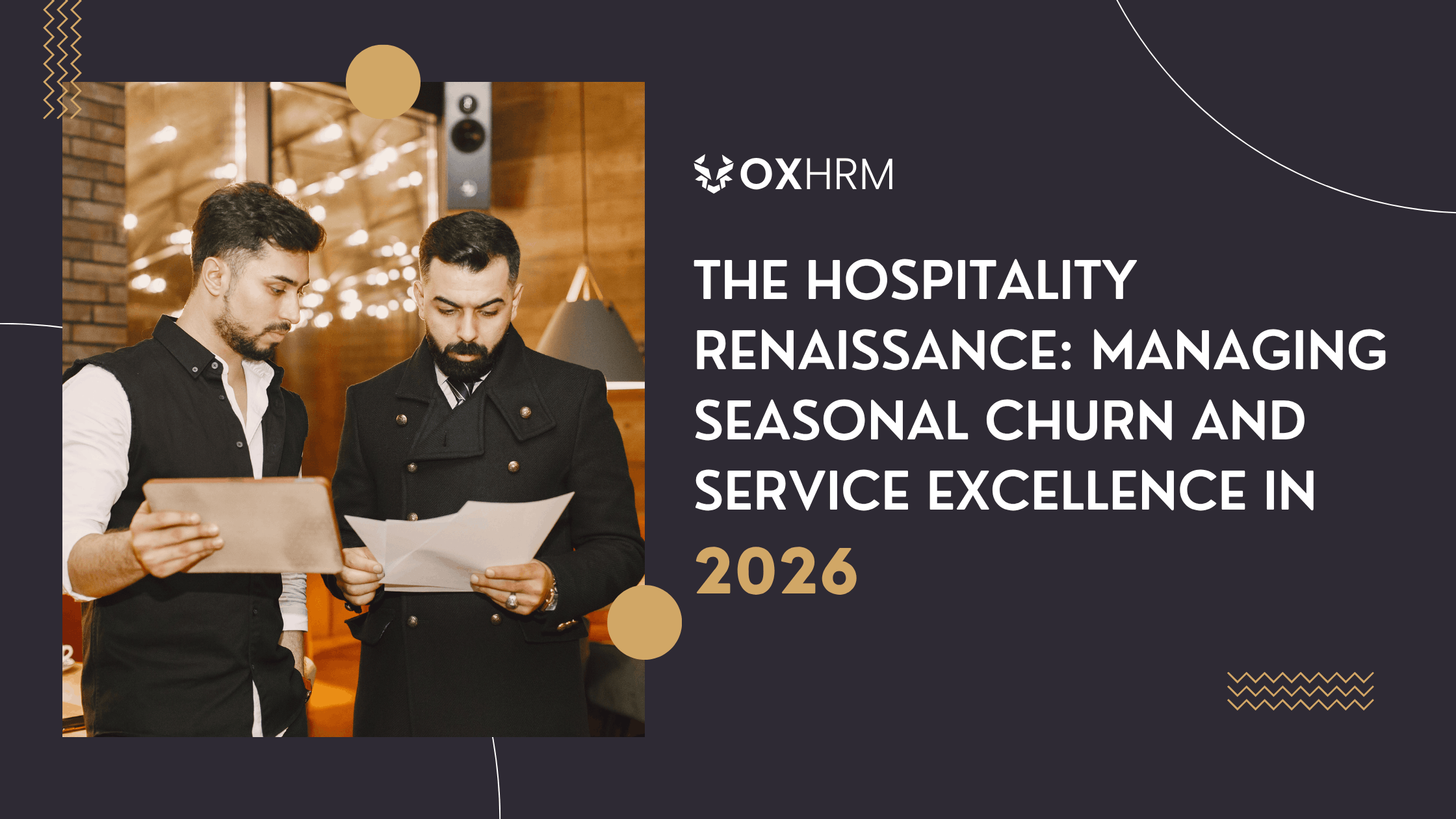
The Hospitality Renaissance: Managing Seasonal Churn and Service Excellence in 2026
In 2024, the hospitality industry was finally breathing a sigh of relief. By 2026, that relief has turned into an aggressive, high-stakes expansion. From the sprawling spiritual hubs of Ayodhya and Varanasi to the luxury eco-resorts of the Andaman Islands and the bustling business hotels in the “Silicon Plains” of Tier-2 India, the industry is booming.
However, for HR leaders, this “Renaissance” has brought a unique set of pressures. Hospitality is perhaps the only industry where the Employee Experience (EX) is immediately and visibly translated into the Guest Experience (GX). If a waiter is tired, a guest sees it; if a housekeeper is untrained, a guest feels it. In 2026, managing this human-centric delivery requires more than just “Staffing”; it requires Strategic Orchestration.
1. The “Guest-Employee Experience” (GX-EX) Link
In 2026, we have moved beyond the mantra of “The Guest is God.” We now understand that “The Employee is the Priest.” If the priest is unhappy, the god will not be served.
The Service Sentiment Loop
Modern hospitality HR uses AI to monitor the Sentiment Loop. * The Correlation: Using OXHRM, managers can overlay guest review data (from platforms like TripAdvisor or Google) with employee engagement data.
-
The Insight: If a specific property in Jaipur shows a dip in guest “Service Speed” scores, the system looks at the staff’s “Fatigue Index” (overtime hours, consecutive night shifts, and leave cancellations).
-
The Fix: HR receives a “Proactive Service Alert.” Instead of blaming the staff, the company triggers an “Incentive Surge” or a “Wellness Break,” recognizing that guest dissatisfaction is almost always a symptom of employee burnout.
2. Managing the “Chameleon Workforce”: Seasonal Staffing 2.0
Hospitality thrives on seasons—monsoon retreats, winter weddings, and summer holidays. This means your workforce must be “elastic.”
A. Flash-Hiring & Rapid Onboarding
When a luxury resort prepares for a wedding season where the guest list jumps from 50 to 500, HR must “Flash-Hire” a massive temporary workforce.
-
Digital Sourcing: In 2026, OXHRM integrates with regional gig-work platforms to source “Verified Service Pros” (Waiters, Chefs, Housekeeping) who have already passed background checks.
-
Mobile-First “Day 0” Training: Before a seasonal worker sets foot on the property, they receive their “Standard Operating Procedures” (SOPs) via a mobile link. They watch 15-second “Service Excellence” videos, take a 5-question quiz, and sign their compliance documents digitally. This ensures that on Day 1, they are “Floor-Ready.”
B. The Pro-Rata Gratuity Challenge
Under the New Wage Code 2026, fixed-term and seasonal workers are now eligible for Pro-rata Gratuity after one year of service.
-
The Accrual Logic: Your HRMS must automatically calculate this liability for every seasonal hire, ensuring your “Cost per Guest” reflects these long-term social security obligations.
3. Multi-Property Orchestration: The “Hub-and-Spoke” Model
Managing a single hotel is hard; managing a chain of 40 boutique properties across India is a compliance and operational minefield.
A. Geofenced Attendance for “Floaters”
In 2026, many hospitality staff are “Floaters”—they might work at the “City Hotel” on weekdays and the “Airport Hotel” on weekends.
-
Multi-Geofencing: OXHRM allows employees to “Clock-In” at any authorized company property. The system automatically recognizes which “Cost Center” they are working under, ensuring that labor costs are correctly attributed to each property without manual entry.
B. Centralized Payroll with Local Compliance
As established in our Distributed Workforce guide (Article 12), every state in India has different Professional Tax (PT) and Shop and Establishment Act rules regarding “Night Shifts” and “Women’s Safety.”
-
The Safety Mandate: For female staff working late-night checkout or audit shifts, the HRMS must log the “Safe Drop-Off” confirmation, ensuring the hotel meets the 2026 safety compliance standards required for its license.
4. Performance 2.0: Sentiment as a Metric
In hospitality, a “Monthly KPI” is too slow. You need to know how the staff performed this morning.
A. Real-Time Guest Feedback Integration
OXHRM integrates with the hotel’s Property Management System (PMS). * The “Kudos” Engine: When a guest leaves a 5-star review specifically mentioning a staff member’s name, the system instantly awards “Excellence Points” to that employee’s digital wallet.
-
The “Service Recovery” Nudge: If a guest complains about room cleanliness, the AI nudges the Housekeeping Lead to conduct a “Micro-Training” session on that specific room block before the next check-in.
B. The “Soft-Skills” Matrix
We don’t just track “Hours Worked”; we track “Service Competencies.” * Skill Tags: Staff are tagged with verified skills like Wine Pairing, Multi-Lingual Greeting (Japanese/French), or Conflict Resolution. This allows the front-desk manager to deploy the “right personality” for a high-value VIP guest.
5. Retention in the “Great Exit” Era
Hospitality has one of the highest attrition rates in the world. To survive 2026, you must provide Financial Agility.
A. Earned Wage Access (EWA) for Frontline Staff
Most hospitality workers (Waiters, Bell-boys, Cleaners) are in the lower-to-middle income bracket.
-
The Financial Buffer: By offering EWA through OXHRM, you allow them to withdraw a portion of their earned salary daily. This eliminates the need for them to take high-interest loans for emergencies, drastically increasing their loyalty to the brand.
B. The “Internal Career Path”
Gen Z and Gen Alpha workers in 2026 want to know “What’s next?”
-
The Career Lattice: The system shows a “Housekeeping Associate” exactly what skills they need (and what courses to take) to become a “Front Office Executive.” When they complete the training, they are automatically shortlisted for the next internal opening.
6. Training & The “QR-Code” SOP
In 2026, we don’t use thick “Training Manuals.” We use Just-in-Time Learning.
A. QR Codes for Instant Mastery
-
The Use Case: A new banquet waiter is unsure how to set up the “Silver Service” for a formal dinner.
-
The Solution: They scan a small QR code inside the pantry with their OXHRM app. A 30-second AR (Augmented Reality) video overlays the correct placement of cutlery on their phone screen.
-
The Result: Instant quality control without needing to pull a manager away from the guests.
B. Mobile Micro-Learning
To maintain “Hygiene Standards” required by 2026 health codes, staff receive a 1-minute “Daily Safety Quiz” on their phone before they can clock in. This ensures that safety is top-of-mind every single day.
7. Compliance: Kitchen Safety and the OSH Code
The Occupational Safety, Health and Working Conditions (OSH) Code 2026 is particularly strict about “Industrial Kitchens.”
The Safety Audit Trail:
-
Mandatory Rest: The AI scheduler blocks “Double Shifts” in the kitchen, recognizing that fatigue leads to burns and accidents.
-
Health Checkups: OXHRM tracks the mandatory annual health screenings for food handlers, blocking staff from the roster if their “Fitness Certificate” has expired.
-
Incident Reporting: If a kitchen accident occurs, the supervisor logs it in 30 seconds via the mobile app, automatically notifying the HR and Safety Officers to ensure the 24-hour reporting deadline is met.
8. Why OXHRM is the Concierge of Hospitality HR
We built OXHRM to handle the Chaos and the Craft of hospitality.
-
Multi-Property Logic: Manage 100+ properties with unique holiday lists and local labor laws from a single dashboard.
-
Offline-Sync Attendance: Perfect for remote resorts with intermittent internet; data syncs the moment the connection is restored.
-
Regional Language Support: Ensure your frontline staff can read their payslips and SOPs in Hindi, Tamil, Marathi, or any of the 12 supported languages.
-
Integrated EWA: Give your staff financial peace of mind, reducing “No-Shows” and turnover.
-
Audit-Ready Compliance: One-click generation of all registers required under the S&E Act and the New Labour Codes.
9. Conclusion: The Human Heart of 2027
As we look toward 2027, the hospitality industry will be defined by “High-Tech, High-Touch.” The technology (AI, HRMS, AR) is there to remove the “Friction” of administration, compliance, and scheduling. This frees your people to focus on the “Magic”—the smile, the personalized greeting, and the anticipation of a guest’s needs.
In 2026, your HRMS is not a “Software”; it is the Engine of Excellence. It ensures that the person greeting your guest is well-rested, accurately paid, properly trained, and genuinely motivated.
Hospitality is, and always will be, a business of people. It’s time to manage them with the respect and technology they deserve.
2026 Hospitality HR Audit Checklist
-
[ ] Compliance: Are our female staff’s late-night drop-offs being logged and verified?
-
[ ] Seasonal: Do we have “Flash-Onboarding” SOP videos ready for the next peak season?
-
[ ] Multi-Property: Is our PT/LWF calculation automated for staff moving between states?
-
[ ] Financials: Are we offering EWA to reduce frontline churn?
-
[ ] Safety: Are our mandatory kitchen health certificates tracked with 90-day alerts?
Table of Contents

Shafeeq Khan is a web developer who creates modern, responsive, and user-friendly websites with clean code and creative design
Latest Posts
The 2031 Existential HR Guide: Managing the Psychological Transition to a Work-Optional World
Welcome to 2031. The decade-long transition that began with the "Great Resignation" and the "AI Revolution" has culminated in a...


The Rise of the Fractional C-Suite: Orchestrating Elite Talent Across Multiple DAOs in the 2030 Contribution Era
By 2030, the traditional "Corner Office" has been auctioned off as a historical artifact. The corporate landscape is no longer...
The 2030 Global Labor Protocol: Navigating the End of National Payroll and the Rise of Algorithmic Compliance
Remember 2024? Remember the frantic scramble at the end of every fiscal quarter? The endless back-and-forth with tax consultants over...